- Home
- Chronic Conditions
- Pain Relief Clinic
- Co-codamol
Co-codamol




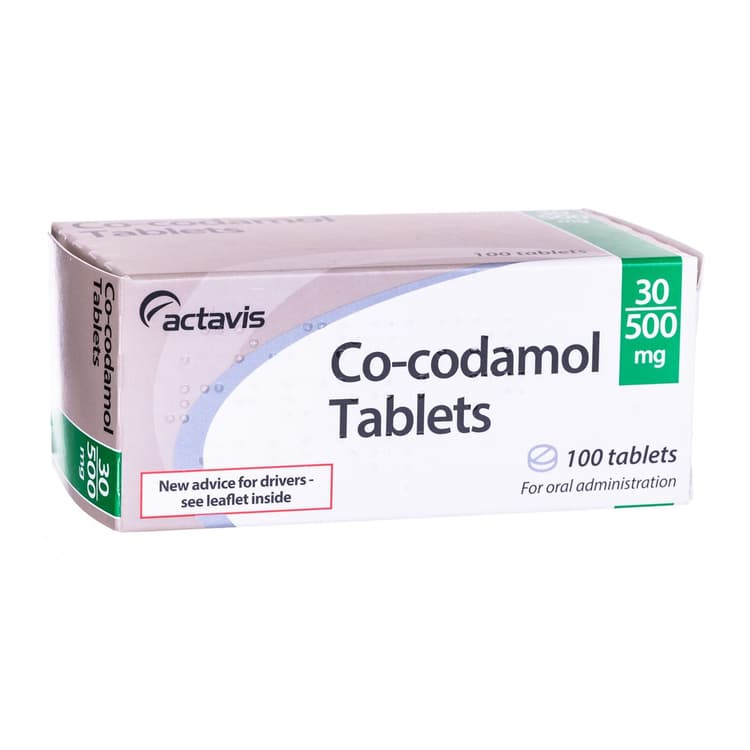


Images for illustrative purposes only
Co-codamol is a combination painkiller that contains codeine phosphate, an opioid, and paracetamol. It is used for the short-term relief of acute moderate pain that other painkillers, such as paracetamol or ibuprofen on their own, have not eased, including back pain, muscular and joint pain, toothache, period pain, sciatica and migraine. The 30mg/500mg strength is a prescription-only medicine, so start a quick online consultation and a UK-registered prescriber will confirm whether it is suitable for you.
- For the short-term relief of acute moderate pain
- Prescribed by UK-registered prescribers
- Genuine medicine, dispensed by UK pharmacies
- No GP appointment or referral needed
- Discreet, tracked delivery, with next-day delivery available
More Information
Co-codamol at a glance
Co-codamol is a prescription and pharmacy painkiller that combines codeine phosphate, an opioid, with paracetamol, and it is used for short-term moderate pain when weaker painkillers have not worked. You can request the 30mg/500mg strength online at PharmXtra after a consultation with a UK-registered prescriber. Here are the key facts at a glance.
| What it is | A combination painkiller. The active ingredients are codeine phosphate (an opioid) and paracetamol. |
|---|---|
| What it treats | Short-term acute moderate pain not relieved by paracetamol or ibuprofen alone, such as back pain, muscular and joint pain, toothache, period pain, sciatica, neuralgia and migraine. |
| How it works | Paracetamol reduces how the body senses pain, while codeine acts on opioid receptors to block pain messages. |
| How to get it | Online consultation with a UK-registered prescriber. No GP appointment or referral needed. |
| UK legal status | 8mg/500mg is a pharmacy (P) medicine sold over the counter. 15mg/500mg and 30mg/500mg are prescription-only medicines (POM). Codeine is a controlled drug. |
| Strengths | 8mg/500mg, 15mg/500mg and 30mg/500mg (codeine/paracetamol). |
| Forms | Tablets, capsules, caplets and effervescent (soluble) tablets. |
| Usual adult dose | One or two tablets every 4 to 6 hours when needed. |
| Maximum | 8 tablets in 24 hours (4g paracetamol and, for 30/500, 240mg codeine). |
| How long to use | Up to 3 days. If pain is not controlled, speak to a prescriber. |
| Time to work | Usually within 30 to 60 minutes. |
| Delivery | Discreet, tracked UK delivery once treatment is approved, with next-day delivery available. |
| Good to know | Codeine can be addictive, so co-codamol is for short-term use. Never take it with other paracetamol-containing medicines. |
A pharmacist's overview
 | Amardeep Bagga (MPharm, MBA), an independent pharmacist, shares the following comment on co-codamol: "Co-codamol combines paracetamol and codeine to relieve moderate pain that milder painkillers have not settled. It works well for short-term use, but because codeine is an opioid, it should be taken at the lowest effective dose and for the shortest time." If you think co-codamol could help, you can start your online consultation and a registered prescriber will review it. If treatment is suitable, they can issue your prescription, and our partner UK pharmacy will dispense and deliver it discreetly to your door, with a range of delivery and payment options. If you have any questions along the way, our team is on hand to help. |
How to get co-codamol online from PharmXtra
You can get co-codamol from PharmXtra by completing a short online consultation, with no GP appointment or referral needed. Because the 30mg/500mg strength is a prescription-only medicine, supply is only ever confirmed after a UK-registered prescriber has reviewed your answers. The process is quick, confidential and fully online.
- Complete a short online consultation about your pain, your health and any medicines you take.
- A UK-registered prescriber reviews your answers to confirm co-codamol is safe and suitable for you.
- If approved, a UK pharmacy dispenses your treatment, with the price shown clearly before you pay.
- Your order is delivered discreetly to your chosen address, with tracked and next-day delivery available.
Start your co-codamol consultation to find out whether it is right for you.
"The consultation is short, but it does real work. It is where we check co-codamol is right for your type of pain and rule out anything that would make codeine unsafe for you, such as certain breathing or liver problems," says our clinical team.
Why choose PharmXtra for co-codamol treatment
PharmXtra is a UK online prescribing service where every request is reviewed by registered clinicians before any medicine is supplied. When you choose PharmXtra for co-codamol, you get:
- UK-registered prescribers and pharmacists who review every consultation.
- Genuine medicine dispensed by a regulated UK pharmacy, not counterfeit tablets from unregulated sellers.
- Discreet, tracked delivery to your door, with next-day delivery available.
- Transparent pricing shown in full before you confirm your order.
- Confidential support if you have questions about your treatment.
Co-codamol price
The price of your co-codamol treatment depends on the strength and quantity your prescriber approves, and the full cost is shown clearly before you pay, with no hidden fees. Pricing is set out in the table below.
| Strength | Quantity | Price |
|---|---|---|
| Co-codamol 30mg/500mg tablets | 100 Tablets | £81.99 |
| Co-codamol 30mg/500mg tablets | 100 Effervescent Tablets | £81.99 |
| Co-codamol 30mg/500mg tablets | 200 Tablets | £119.99 |
| Co-codamol 30mg/500mg tablets | 200 Effervescent Tablets | £119.99 |
Prices are factual and include the prescriber review and pharmacy dispensing. Supply is only ever confirmed after a successful consultation.
What is co-codamol and what does it treat?
Co-codamol is a combination painkiller that contains two active ingredients, codeine phosphate and paracetamol, working together to relieve pain. It is prescribed for acute moderate pain that has not been eased by paracetamol or ibuprofen on their own, which is why it is often described as a step up from everyday painkillers. Common uses include back pain, muscular strains, joint pain, toothache, period pain, sciatica, neuralgia, tension headaches and migraine.
Codeine is the opioid part of co-codamol and paracetamol is the non-opioid part. Combining the two means each ingredient tackles pain in a different way, and this can give some people more relief than paracetamol alone. A Cochrane review found that about half of people with pain after surgery got at least 50% pain relief from 1000mg of paracetamol plus 60mg of codeine, the same as two co-codamol 30/500 tablets, compared with fewer than 20% on a dummy tablet, a number needed to treat of 2.2.[2] The extra benefit from the codeine itself is modest, lifting the number of people who get good relief by around 10 to 15%, and an earlier BMJ systematic review found this small gain came with more side effects such as drowsiness and nausea.[1] Because codeine is an opioid, co-codamol is meant for short courses rather than long-term everyday use.
| Active ingredients | Codeine phosphate (an opioid) and paracetamol (also called acetaminophen) |
|---|---|
| Drug class | Opioid and non-opioid analgesic combination |
| Main uses | Short-term acute moderate pain not relieved by weaker painkillers |
| Typical onset | About 30 to 60 minutes after a dose |
How does co-codamol work?
Co-codamol works because its two ingredients ease pain in different ways at the same time. Paracetamol reduces the way your body produces and senses pain signals, while codeine, an opioid, acts on opioid receptors in the brain and spinal cord to block pain messages before they are fully registered. Used together, they can control moderate pain that paracetamol alone would not settle.
Once codeine is absorbed, the body converts a portion of it into morphine, which is what produces most of its pain-relieving effect. How quickly and how much codeine is converted depends on a liver enzyme called CYP2D6 and varies from person to person, which is one reason your prescriber checks your suitability before approving treatment.[3]
Summary of co-codamol
| Type of medicine | Opioid and paracetamol combination painkiller (analgesic) |
| What it treats | Short-term acute moderate pain (back, muscular and joint pain, toothache, period pain, sciatica, neuralgia, headache and migraine) |
| Active ingredients | Codeine phosphate and paracetamol |
| Brand names | Solpadol, Kapake, Zapain and Tylex |
| Available strengths | 8mg/500mg, 15mg/500mg and 30mg/500mg (codeine/paracetamol) |
| Available as | Tablets, capsules, caplets and effervescent (soluble) tablets |
| UK legal status | 8mg/500mg is a pharmacy medicine; 15mg/500mg and 30mg/500mg are prescription-only medicines. Codeine is a controlled drug. |
| Possible side effects | Constipation, feeling or being sick, drowsiness, dizziness, dry mouth and headache |
| Patient Information Leaflet | See the co-codamol 30/500 patient information leaflet. |
Co-codamol strengths and forms explained
Co-codamol comes in three strengths, and the amount of codeine is what changes, while the paracetamol stays at 500mg. The strength decides whether you can buy it over the counter or need a prescription. The paracetamol dose is the same in each, so the maximum number of tablets a day is the same too.
| Strength (codeine/paracetamol) | How you get it | Typical use |
|---|---|---|
| 8mg/500mg | Pharmacy (P) medicine, sold over the counter after a word with the pharmacist | Mild pain not eased by paracetamol or ibuprofen alone |
| 15mg/500mg | Prescription-only medicine (POM) | Moderate pain needing a stronger dose of codeine |
| 30mg/500mg | Prescription-only medicine (POM) | Moderate pain where lower strengths have not worked |
The lowest strength, co-codamol 8mg/500mg, is a pharmacy medicine you can buy over the counter from high-street chemists such as Boots, LloydsPharmacy and Superdrug. The 15mg/500mg and 30mg/500mg strengths contain more codeine, so they are prescription-only and need a prescriber's approval, which is what your PharmXtra consultation arranges.
Co-codamol also comes in different forms to suit how you prefer to take it: standard tablets, capsules, caplets, and effervescent (soluble) tablets that dissolve in water. One thing worth knowing is that effervescent tablets contain a lot of sodium (salt), so they may not suit you if you are on a low-sodium diet or have high blood pressure. If that applies to you, mention it in your consultation.
What is co-codamol used for?
Co-codamol is used for short-term acute moderate pain that milder painkillers have not controlled. It is a second step for pain relief, reached for when paracetamol or ibuprofen alone have not done enough. The kinds of pain it is commonly used for include:
- Back pain and musculoskeletal pain, including muscular strains and joint pain
- Toothache and pain after dental work
- Period pain (dysmenorrhoea)
- Sciatica and neuralgia, where nerves are involved
- Tension headaches and migraine
- Rheumatic pain and general aches that have not settled with weaker painkillers
Co-codamol treats pain, it does not treat the cause, so it is meant to help you through a short, painful spell rather than to be taken every day. If your pain keeps coming back or lasts more than a few days, that is a sign to speak to a prescriber rather than to keep taking it.
Co-codamol dosage and how to take it
The usual co-codamol dose for adults is one or two tablets every 4 to 6 hours when you need them, with at least 4 hours between doses. You should not take more than 8 tablets in any 24 hours, which is the limit that keeps you within the safe daily amount of paracetamol (4g) and, for the 30mg/500mg strength, codeine (240mg).[13] Always leave the full gap between doses, even if your pain returns sooner.
| Group | Usual dose | Maximum in 24 hours | How long |
|---|---|---|---|
| Adults | 1 to 2 tablets every 4 to 6 hours as needed | 8 tablets (4g paracetamol; 240mg codeine for 30/500) | Up to 3 days without medical advice |
| Young people aged 12 to 17 | Only if other painkillers have not worked, as advised by a prescriber | As advised by a prescriber | Shortest time possible |
Swallow tablets or capsules whole with a drink of water, with or without food. Effervescent tablets should be dissolved fully in water before drinking. The most important safety rule is never to take co-codamol alongside any other medicine that contains paracetamol, because it is easy to go over the safe paracetamol limit without realising, and a paracetamol overdose can seriously damage the liver. If you miss a dose, take it when you remember unless your next dose is due soon, and never take a double dose to catch up.
Co-codamol is not meant to be taken for more than 3 days in a row without medical advice. If your pain is not controlled after 3 days, do not simply keep taking it; speak to a prescriber, pharmacist or your GP.
Is co-codamol right for you?
Co-codamol suits many adults with short-term moderate pain, but it is not right for everyone, which is exactly what your consultation is designed to check. Your prescriber looks at your medical history and current medicines before approving treatment. Co-codamol is generally not suitable, or needs extra care, if any of the following apply:
- You have breathing problems such as asthma, chronic obstructive pulmonary disease (COPD) or sleep apnoea
- You have liver or kidney problems, which can affect how the medicine is handled
- You have had a head injury or have raised pressure in the head
- You have a condition that causes seizures, or problems with your adrenal glands or bowel
- You have a history of alcohol or drug dependence, or you regularly drink more than 14 units of alcohol a week
- You are a known CYP2D6 ultra-rapid metaboliser, meaning your body turns codeine into morphine unusually quickly (see below)
Co-codamol should not be given to children under 12, because they are at higher risk of serious breathing problems from codeine.[16] It is also not used in anyone under 18 who has had their tonsils or adenoids removed for obstructive sleep apnoea. An honest consultation is the quickest way to find out whether co-codamol is safe for you, and your prescriber can suggest an alternative if it is not.
Ultra-rapid metabolisers and codeine safety
Around 1 to 2 in 100 people are "ultra-rapid metabolisers", rising to more than 1 in 10 in some populations, which means a genetic difference in the CYP2D6 enzyme makes their body convert codeine into morphine faster than usual.[3] In these people, even a normal dose can lead to too much morphine and a risk of serious side effects such as very slow breathing, and case reports in the New England Journal of Medicine have linked this to life-threatening opioid toxicity and to a child's death after surgery.[4][5] This is why co-codamol is not suitable if you are known to be an ultra-rapid metaboliser, and why we ask about your history before prescribing.
Co-codamol in pregnancy and breastfeeding
Co-codamol is generally not recommended in pregnancy, and paracetamol on its own is usually the preferred painkiller instead. Codeine in pregnancy has been studied in large groups: a Norwegian study of 2,666 women who took codeine while pregnant found no rise in birth defects, at 4.9% compared with 5.0% in women who took none, though using codeine late in pregnancy was linked to some delivery complications.[6] It is still best avoided in the third trimester and during labour, because regular use late in pregnancy can make the baby dependent and lead to withdrawal after birth, and codeine taken around delivery can slow the baby's breathing. Co-codamol should also be avoided while breastfeeding, because codeine passes into breast milk and, in a case reported in The Lancet, contributed to the death of a breastfed baby whose mother was an ultra-rapid metaboliser.[7] If you are pregnant, planning a pregnancy or breastfeeding, tell your prescriber, who can talk you through safer options such as dihydrocodeine or co-dydramol where appropriate.
Side effects of co-codamol
The most common side effects of co-codamol are constipation, feeling or being sick, drowsiness, dizziness and a dry mouth. These happen mainly because of the codeine, and many people find they ease as the body gets used to the medicine. Most side effects are mild, but a few are serious and need urgent medical help.
| Common side effects | Constipation, feeling sick (nausea) or vomiting, drowsiness, dizziness, dry mouth, headache |
|---|---|
| Serious reactions (get medical help) | Slow or shallow breathing (respiratory depression), a serious allergic reaction, difficulty passing urine, and signs of dependence or withdrawal |
Constipation is the side effect people notice most, so drinking plenty of water and eating more fibre can help. Drowsiness is also common, so do not drive or use tools or machines until you know how co-codamol affects you. Call 999 or go to A&E if you or someone else has very slow or shallow breathing, extreme sleepiness, or a serious allergic reaction such as swelling of the face, mouth or throat.
A doctor's overview of the side effects and how to manage them
 | Dr Irfan Siddique, an independent Deputy Medical Superintendent, explains the common side effects and how to handle them: "Co-codamol is a pain relief medicine containing codeine and paracetamol, used for mild to moderate pain. Common side effects include dizziness, constipation, nausea, drowsiness and headaches, and stopping suddenly after regular use can cause withdrawal symptoms. Usually these effects settle over time, but it is best to speak to your doctor if they trouble you or do not improve." |
Co-codamol interactions to avoid
The most important interaction to avoid with co-codamol is any other medicine that contains paracetamol, because taking two together makes a paracetamol overdose easy. Codeine can also interact with other medicines that slow the brain and body, and with a few that change how it is broken down. Tell your prescriber about everything you take, including anything you buy without a prescription.
| Do not combine with | Why it matters |
|---|---|
| Other paracetamol-containing medicines (many cold and flu remedies) | Risk of accidental paracetamol overdose and serious liver damage |
| Other opioids and strong painkillers | Adds to the risk of drowsiness and slowed breathing |
| Benzodiazepines (such as diazepam), sleeping tablets and alcohol | Increases sedation and the risk of dangerously slow breathing |
| Some antidepressants (including MAOIs) and anti-sickness medicines | Can increase side effects; your prescriber will check the combination |
| Warfarin and other blood thinners | Regular paracetamol use can increase the blood-thinning effect over time |
You can usually take ibuprofen alongside co-codamol, because they are different types of painkillers, as long as you have no reason to avoid ibuprofen. If you are not sure whether something you take is safe with co-codamol, check with your prescriber or pharmacist first.
Co-codamol and addiction: why it is short-term
Co-codamol is prescribed in short courses because codeine is an opioid, and taking it regularly can lead to tolerance, dependence and addiction. A systematic review in the Medical Journal of Australia found that dependence can develop even with lower-strength codeine medicines bought over the counter.[8] Tolerance means you need more to get the same effect, while dependence means your body starts to rely on it, so stopping suddenly can bring on withdrawal. This is why co-codamol is meant for a few days at a time and not as an everyday painkiller.
If you have taken co-codamol regularly and then stop abruptly, you may get codeine withdrawal symptoms such as sweating, shaking, a racing heart, stomach cramps, feeling anxious and trouble sleeping. The safe way to stop after regular use is to reduce the dose gradually, which your prescriber can help you plan.
"Co-codamol is genuinely useful for short-term pain, but codeine is an opioid, so the safest way to use it is at the lowest dose that works, for the shortest time. If you are finding it hard to stop, that is not a failing; it is exactly what we are here to help with," says our clinical team. Free, confidential advice is also available from FRANK.
Co-codamol overdose: signs and what to do
A co-codamol overdose is a medical emergency, and the paracetamol part is especially dangerous because it can seriously damage the liver even when you feel well at first. In a United States study of 662 people with acute liver failure, paracetamol was the single most common cause, behind 42% of cases.[9] The codeine part can slow breathing to a dangerous level. Because the early signs of a paracetamol overdose can be mild or absent, never wait to see how you feel.
| Paracetamol warning signs | Feeling sick, being sick, tummy pain, and later, yellowing of the skin or eyes |
|---|---|
| Codeine warning signs | Very slow or shallow breathing, extreme drowsiness, pinpoint pupils and loss of consciousness |
If you think you or someone else has taken too much co-codamol, call 999 or go to A&E straight away, even if they seem fine. Take the packet with you so the medical team knows exactly what was taken. Treatment for a paracetamol overdose works best when it is started early.
Can you drive while taking co-codamol?
You should not drive while taking co-codamol if it makes you feel drowsy, dizzy or unable to concentrate. Codeine is an opioid and it is against the law to drive if your driving is impaired by any medicine. When co-codamol is taken as prescribed and it does not affect you in this way, you may be able to drive, but you must stop if you feel any effects. If you are unsure, do not drive until you know how the medicine affects you, and check the advice in your drug-driving law guidance if you are worried.
Co-codamol compared with other painkillers
Co-codamol is one of several codeine-based painkillers, and the right one depends on your pain, your health and how you respond. The main difference between them is the type and strength of the opioid, and whether paracetamol is included. The table below sets out how co-codamol compares with a few common alternatives.
| Medicine | What is in it | Good to know |
|---|---|---|
| Co-codamol | Codeine phosphate plus paracetamol | Two painkillers in one, for moderate pain that weaker painkillers have not settled |
| Codeine | Codeine phosphate on its own | Let's paracetamol be dosed separately; still an opioid for short-term use |
| Dihydrocodeine | Dihydrocodeine on its own | A related opioid, sometimes used when codeine is not suitable |
| Co-dydramol | Dihydrocodeine plus paracetamol | A similar combination using a different opioid |
Your prescriber will help you decide which option fits you during your consultation. To read more, see our guides on whether dihydrocodeine is stronger than codeine and whether Solpadol is the same as co-codamol.
Patient Information Leaflet
For full details about this medicine, read the co-codamol 30/500 patient information leaflet and the summary of product characteristics on the electronic medicines compendium.
What our customers say
PharmXtra customers rate our service, delivery and pharmacy through independent reviews, and these reflect people's experience of using PharmXtra, from the consultation to delivery. Everyone's experience of a medicine is different, so co-codamol is only ever supplied after a prescriber confirms it is suitable for you. You can also read independent patient experiences of co-codamol on iwantgreatcare.org.
Co-codamol FAQs
Can you get co-codamol online in the UK?
Yes, you can get co-codamol online in the UK from PharmXtra by completing a short consultation that a UK-registered prescriber reviews. The 30mg/500mg strength is a prescription-only medicine, so it is supplied only if the prescriber confirms it is suitable, and a UK pharmacy then dispenses and delivers it. The lowest 8mg/500mg strength is also sold over the counter in pharmacies.
Do you need a prescription for co-codamol?
You need a prescription for co-codamol 15mg/500mg and 30mg/500mg, because these are prescription-only medicines. The lowest strength, co-codamol 8mg/500mg, is a pharmacy medicine you can buy over the counter after a word with the pharmacist. At PharmXtra, a prescription for the higher strengths is arranged through your online consultation, with no separate GP visit needed.
How much does co-codamol cost?
The cost of co-codamol depends on the strength and quantity your prescriber approves, and the full price is shown clearly before you confirm your order. Pricing is set out on this page, and there is no separate charge for the prescriber review.
How is co-codamol delivered?
Once your treatment is approved, co-codamol is dispensed by a UK pharmacy and sent with discreet, tracked delivery, and next-day delivery is available. You can choose from the delivery options shown during checkout.
What is co-codamol used for?
Co-codamol is used for short-term acute moderate pain that has not been eased by paracetamol or ibuprofen on their own. Common examples include back pain, muscular and joint pain, toothache, period pain, sciatica, neuralgia and migraine. It combines codeine and paracetamol to give stronger relief than either alone.
How long does co-codamol take to work and how long does it last?
Co-codamol usually starts to work within about 30 to 60 minutes, and the pain relief typically lasts around 4 to 6 hours, which is why doses are spaced 4 to 6 hours apart. If it is not controlling your pain, do not take extra; speak to a prescriber or pharmacist instead.
What is the maximum dose of co-codamol in a day?
The maximum is 8 tablets in 24 hours for an adult, taken as one or two tablets every 4 to 6 hours. This keeps you within the safe daily limit of paracetamol (4g) and, for the 30mg/500mg strength, codeine (240mg). Never take other paracetamol-containing medicines at the same time.
How long can you take co-codamol for?
You should take co-codamol for no more than 3 days in a row without medical advice, because codeine can become addictive. If your pain is not controlled after 3 days, speak to a prescriber, pharmacist or GP rather than continuing to take it.
Is co-codamol addictive?
Yes, co-codamol can be addictive because it contains codeine, an opioid, which is why it is prescribed for short courses and at the lowest effective dose. Taking it regularly for a long time raises the risk of dependence, and stopping suddenly after regular use can cause withdrawal, so it should be reduced gradually with your prescriber's advice.
Can you take co-codamol when pregnant or breastfeeding?
Co-codamol is generally not recommended in pregnancy, and paracetamol on its own is usually the preferred painkiller instead. Codeine should be avoided in the third trimester, around labour and while breastfeeding, because it can affect the baby. Always tell your prescriber if you are pregnant, planning a pregnancy or breastfeeding.
Can you take co-codamol with paracetamol or ibuprofen?
You must not take co-codamol with any other paracetamol-containing medicine, because co-codamol already contains paracetamol and doubling up risks an overdose. You can usually take ibuprofen alongside co-codamol, as they are different types of painkillers, provided you have no reason to avoid ibuprofen. Check with your prescriber or pharmacist if you are unsure.
Is co-codamol an opioid?
Co-codamol contains codeine, which is an opioid, so part of the medicine is an opioid painkiller. The other ingredient, paracetamol, is not an opioid. Because of the codeine, co-codamol is a controlled drug and is used for short-term pain relief only.
Is co-codamol the same as Zapain, Solpadol or Kapake?
Yes, Zapain, Solpadol and Kapake are all brand names for co-codamol, the combination of codeine and paracetamol. Tylex is another brand name. They contain the same active ingredients, so a branded version and generic co-codamol of the same strength work in the same way.
Final Thoughts From Our Clinical Team
"Co-codamol has a real place in treating short-term moderate pain when everyday painkillers have not been enough, and used correctly it can help you through a genuinely difficult few days. Our job is to make sure it is the right choice for your type of pain, to check that codeine is safe for you, and to keep the dose low and the course short so it does its job without causing problems. The two things we always come back to are simple: never take it with another medicine that contains paracetamol, and do not keep taking it beyond a few days without advice. If moderate pain is affecting your daily life, start a consultation and let our prescribers help you find the safest way forward."
PharmXtra Clinical Team
References
- de Craen AJ, Di Giulio G, Lampe-Schoenmaeckers AJ, Kessels AG, Kleijnen J (1996): Analgesic efficacy and safety of paracetamol-codeine combinations versus paracetamol alone, a systematic review, BMJ
- Toms L, Derry S, Moore RA, McQuay HJ (2009): Single dose oral paracetamol (acetaminophen) with codeine for postoperative pain in adults, Cochrane Database of Systematic Reviews
- Crews KR et al. (2021): Clinical Pharmacogenetics Implementation Consortium (CPIC) guideline for CYP2D6, OPRM1 and COMT genotypes and select opioid therapy, including codeine, Clinical Pharmacology and Therapeutics
- Gasche Y, Daali Y, Fathi M, et al. (2004): Codeine intoxication associated with ultrarapid CYP2D6 metabolism, New England Journal of Medicine
- Ciszkowski C, Madadi P, Phillips MS, Lauwers AE, Koren G (2009): Codeine, ultrarapid-metabolism genotype, and postoperative death, New England Journal of Medicine
- Nezvalova-Henriksen K, Spigset O, Nordeng H (2011): Effects of codeine on pregnancy outcome, results from a large population-based cohort study, European Journal of Clinical Pharmacology
- Koren G, Cairns J, Chitayat D, Gaedigk A, Leeder SJ (2006): Pharmacogenetics of morphine poisoning in a breastfed neonate of a codeine-prescribed mother, The Lancet
- Nielsen S et al. (2018): Identifying and treating codeine dependence, a systematic review, Medical Journal of Australia
- Larson AM, Polson J, Fontana RJ, et al. (2005): Acetaminophen-induced acute liver failure, results of a United States multicenter, prospective study, Hepatology
- NHS: Co-codamol for adults
- NHS: Who can and cannot take co-codamol
- NHS: Pregnancy, breastfeeding and fertility while taking co-codamol
- electronic medicines compendium (emc): Co-codamol 30/500 Tablets Summary of Product Characteristics (SmPC)
- electronic medicines compendium (emc): Co-codamol 30/500 Tablets Patient Information Leaflet (PIL)
- British National Formulary (BNF): Co-codamol dosage and safety information
- MHRA Drug Safety Update: Codeine-containing pain relief in children (morphine toxicity and CYP2D6 ultra-rapid metabolisers)
- GOV.UK: Drug driving law
- FRANK: Codeine, advice and support
Related treatments and guides
Related treatments
PharmXtra guides
Medically Reviewed By:


Alicia Barnes
Dr Alicia Barnes is an experienced NHS and private practice GP offering the personalised touch and the utmost convenience for her patients. Graduating from Keele University Medical School in 2016, she is trained in a variety of medical and surgical specialities. Please note: Dr Barnes works with PharmXtra specifically to review medical content for accuracy. She is not involved in any aspect of the consultation or prescription process.